A customer Googles your roofing company, sees a 212 number, and assumes you're based in Manhattan — even if you're operating out of Queens. That assumption is worth money. The phone number you list on your website, your Google Business Profile, and your invoices is doing quiet sales work 24 hours a day, and most new LLC owners pick one in about 90 seconds without thinking it through.
It deserves more than 90 seconds.
The Core Decision: Local Number or Toll-Free?
These aren't just aesthetic choices. They signal different things to different customers.
A local number — one with an area code tied to a specific metro or region — tells callers you're a neighbor. For service businesses (plumbing, landscaping, law practices, insurance agencies), local presence drives call-through rates. People trust that someone with a 512 Austin number actually shows up in Austin.
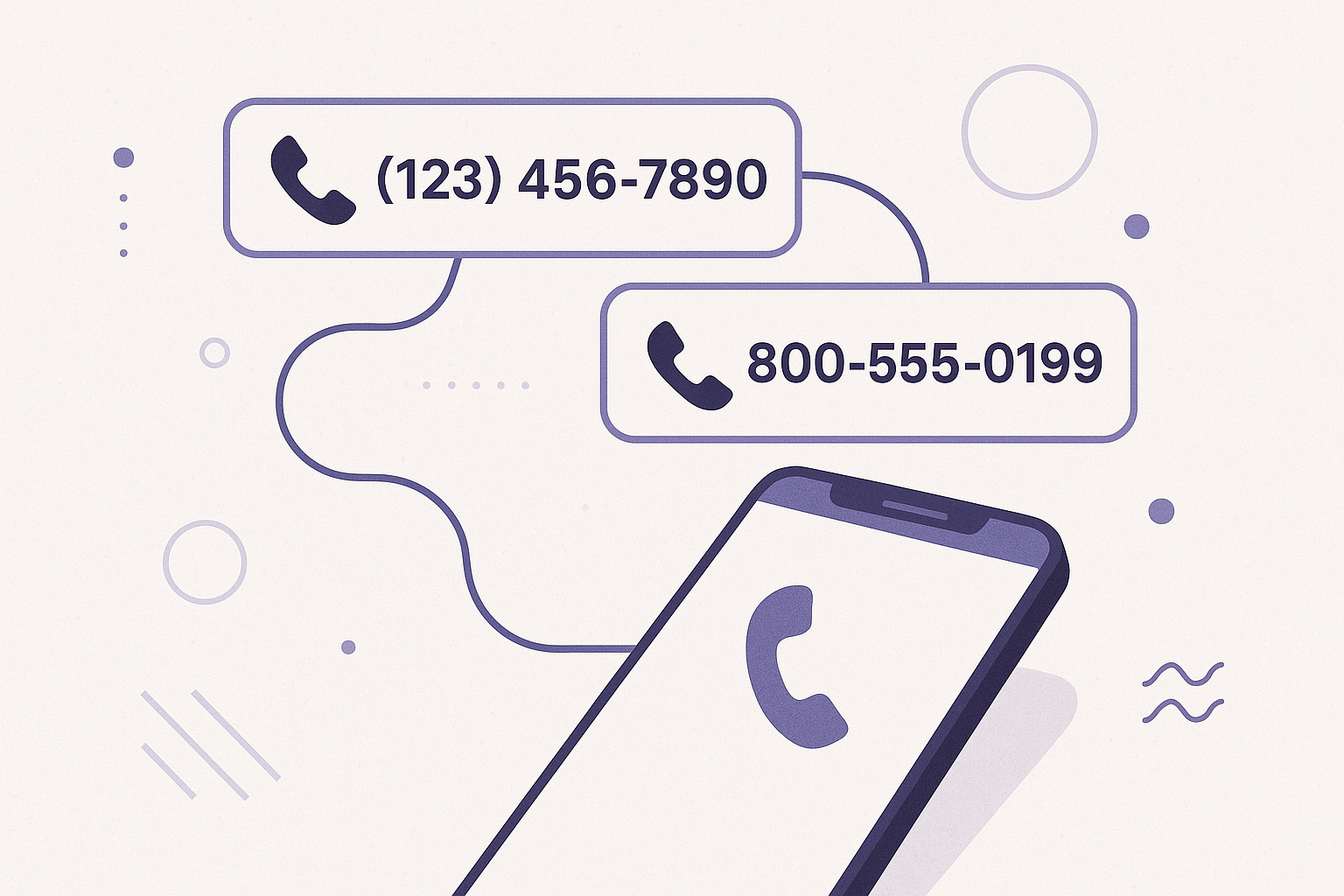
A toll-free number — 800, 888, 877, 866, 855, 844, or 833 — signals scale. It says you're established, you want calls from anywhere in the country, and you've been around long enough to invest in a real business number. For e-commerce brands, SaaS companies, and nationwide services, toll-free often performs better because it removes the question of geography entirely.
The honest answer: many small businesses benefit from having both. More on that in a moment.
Why the Area Code Itself Matters
Not all local numbers are created equal. Certain area codes carry perception weight that others don't.
- 212 (Manhattan core) — projects prestige and seriousness, especially in finance, media, and law
- 310 (West LA) — strong in entertainment, tech, and creative industries
- 312 (Chicago) — solid credibility for Midwest B2B and professional services
- 305 (Miami) — useful for businesses serving Latin American markets or Florida-based clients
- 800 — the original toll-free prefix, still the most recognized and trusted by older demographics
If you're a solo consultant working remotely, a 212 or 312 number can make you look like a real operation — even before you've hired your first employee. Conversely, if you serve a tight geographic community (say, a dental practice in Scottsdale), a 480 number will outperform any toll-free option because patients want a local dentist, full stop.
Pick the area code that matches where your customers are, not just where you are.
Adding a Second Line to Your Cell Phone
Here's a practical reality: most new LLC owners aren't ready to set up a full desk phone system. You're running everything from your cell. That's fine. But mixing personal and business calls on the same number is a mistake that catches up with you fast — missed voicemails, no way to screen after hours, no professional greeting, no call logs for your accountant.
The solution is a second line — a dedicated business number that rings through an app on your existing iPhone or Android. Services like Google Voice (free, limited), OpenPhone, Grasshopper, and RingCentral all work this way. You get a real phone number, a separate voicemail box with a custom greeting, and the ability to turn off business calls when you're off the clock.
What to look for in a second-line setup:
- Separate voicemail with a professional greeting you can record yourself
- Call recording — useful for quality control and dispute resolution
- Text messaging from your business number (customers expect it)
- Business hours settings so calls roll to voicemail automatically at 6 p.m.
Monthly costs for these apps typically run $10–$30. That's a trivial expense compared to the professionalism it buys you.
Vanity Numbers and Memorable Patterns
Once you've settled on local vs. toll-free and chosen your area code, there's a third layer worth considering: the actual digit string.
A memorable number reduces the cognitive load on potential customers. Think about it — if you hear a radio ad for a plumber, you're not going to pull over to type the number into your phone. But if the number is 800-555-PIPE or ends in a repeating pattern like 555-2222, you might actually remember it.
Pattern types that stick:
- Repeating digits: 555-3333 or 777-8888
- Sequential digits: 800-234-5678
- Alpha/vanity: 800-FLOWERS, 1-800-LAWYERS
- Easy pairs: 800-212-1212 (double pairs are easy to recall)
Vanity and patterned numbers can be acquired through a premium number marketplace. GreatNumber, for example, lists thousands of local and toll-free numbers with clean patterns, repeating digits, and recognizable sequences — useful when you want a number that doubles as a marketing asset.
A Concrete Example
Say you're opening a real estate brokerage in Denver. Here's a reasonable setup:
- Local number with 720 or 303 area code — your primary listing number for the Google Business Profile and yard signs. Buyers and sellers see a Denver number and trust you're local.
- Toll-free 800 number — listed on your website's national search pages and any out-of-state referral channels.
- Both numbers forward to the same cell via a business phone app with separate voicemail boxes.
Total cost: well under $50/month. Perceived professionalism: significant.
Quick Takeaways
- Local numbers build trust with geographically-minded customers; toll-free signals national scale and establishment
- Area codes like 212, 310, and 312 carry reputational weight beyond their geography
- A second business line on your cell (via apps like OpenPhone or Grasshopper) costs $10–$30/month and keeps personal and business calls separate
- Repeating or sequential digit patterns make numbers far easier to remember — treat your number like a marketing asset
- Many small businesses benefit from running both a local and a toll-free number simultaneously
If you're ready to find a number that fits your market — whether that's a clean local line in your city's area code or a toll-free 800 number with a pattern worth remembering — browse the available inventory at GreatNumber and see what's out there.