Your phone buzzes. The screen flashes "Scam Likely" before you even think about answering. You ignore it — just like nearly everyone else does. That label, applied by carriers like T-Mobile, AT&T, and Verizon using STIR/SHAKEN call authentication and reputation databases, has become one of the most powerful ignore-triggers in modern telecommunications. And if your business number happens to share an area code with high-volume scam operations, you may be getting painted with the same brush.
Why Certain Area Codes Earn a Bad Reputation
Phone scammers aren't random. They cluster around specific area codes for deliberate reasons: local presence spoofing (making a call look like it's coming from your own area), low-cost number acquisition, and geography that's harder to regulate. Carriers and third-party call-reputation firms like Hiya, First Orion, and TNS track complaint volumes and flagging rates by NPA (the industry term for area code). When enough numbers within a code get reported, the entire prefix can develop a tainted reputation — even legitimate numbers within it get flagged more aggressively.
The core mechanism is simple: scammers spoof or register numbers in bulk within specific area codes, generate thousands of calls, rack up spam reports, and move on. The area code absorbs the reputational damage long after they're gone.
Area Codes to Avoid: The Scam-Likely Hotspots
These are the area codes most consistently associated with scam-likely call flags, based on consumer complaint data, carrier blocking reports, and telecom research:
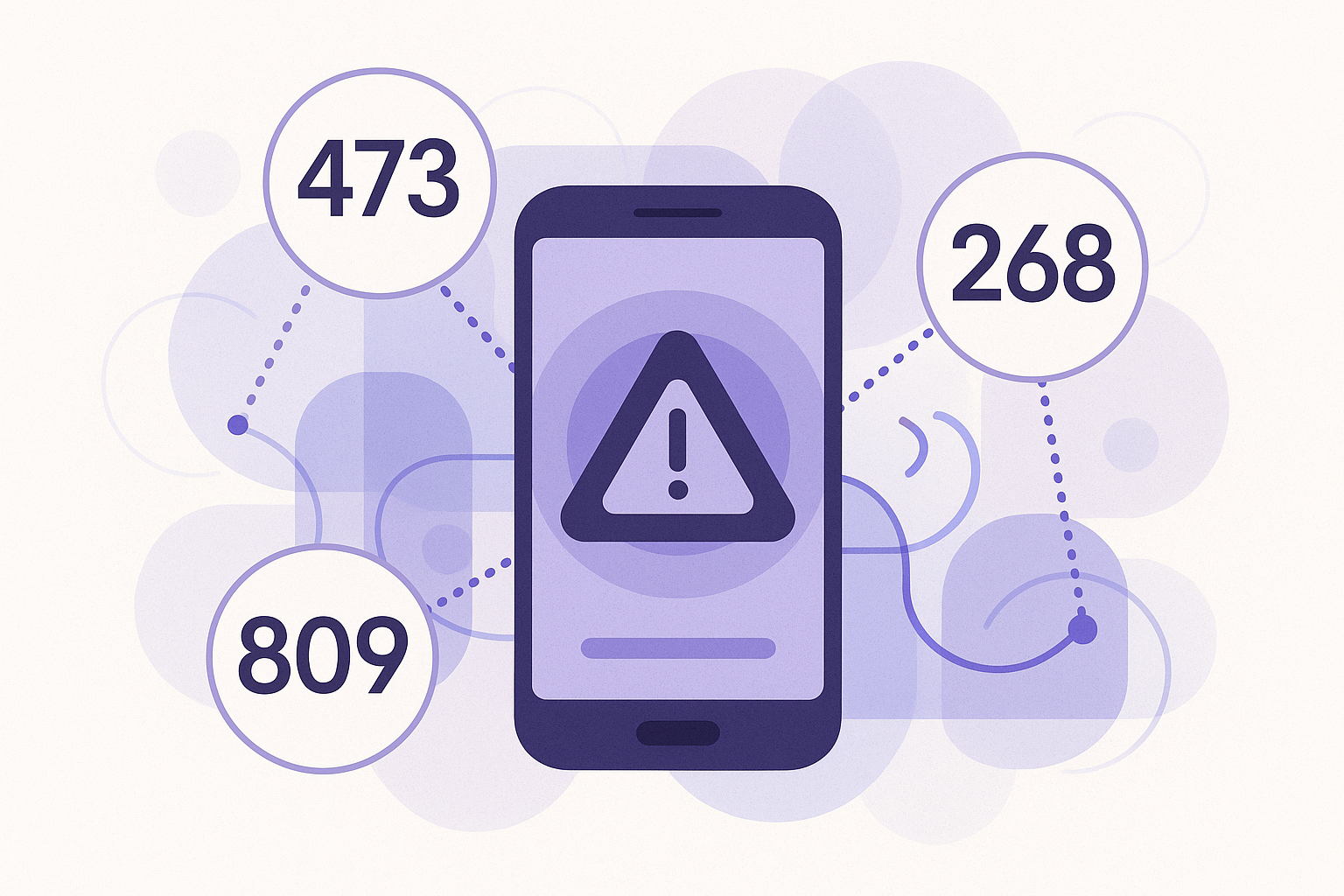
- 268, 284, 473, 664, 649, 767, 809, 829, 849, 876 — These are Caribbean-based area codes in the North American Numbering Plan (NANP). They look like US domestic calls but connect internationally, often to premium-rate numbers. The "one-ring scam" runs almost exclusively through these codes. If you see a missed call from 876 (Jamaica) or 809 (Dominican Republic), don't call back.
- 202 (Washington, D.C.) — Heavily spoofed because "government caller" psychology makes people pick up.
- 347 and 718 (New York City) — High volume, high complaint rates due to sheer number density and spoofing activity.
- 214 (Dallas, TX) — Consistently appears in First Orion complaint reports as a top scam-likely source.
- 323 (Los Angeles, CA) — Similar pattern to 214; large metro codes with millions of numbers in circulation attract scammer farming.
- 404 (Atlanta, GA) — One of the most spoofed codes in the Southeast.
- 786 and 305 (Miami, FL) — Particularly common in Social Security Administration and IRS impersonation scams.
This doesn't mean every call from 876 or 404 is a scam — far from it. It means those area codes carry elevated suspicion scores in carrier algorithms.
How "Scam Likely" Labels Actually Work
T-Mobile pioneered the on-screen "Scam Likely" label. Other carriers followed with their own versions: AT&T's ActiveArmor shows "Suspected Spam," Verizon's Call Filter uses "Spam Risk." The labels draw from a few sources:
- STIR/SHAKEN attestation — If your call doesn't carry a full "A" attestation (meaning the carrier can verify you own the number you're calling from), it's already one strike against you.
- Third-party call-reputation databases — Hiya, TNS, and First Orion score numbers in real time based on complaint volume, call patterns, and duration data.
- User reports — When enough people report a number as spam via their native dialer, it feeds back into the database quickly.
A number can go from clean to flagged within 24–48 hours of being used for high-volume outbound calling — even by a legitimate business.
How to Choose a Number That Won't Get Flagged
The best defense is starting with a clean, credible number. Here's what to look for:
- Avoid recently recycled numbers. A number that was used by a debt collector or telemarketer before you acquired it may already carry a bad reputation. Check any number you're considering at FreeCarrierLookup.com or run it through Hiya's portal before you buy.
- Choose established, lower-risk area codes. Codes like 212 (Manhattan), 312 (Chicago), 415 (San Francisco), or 617 (Boston) carry strong local business credibility and typically lower baseline scam-flag rates than the codes listed above.
- Avoid toll-free numbers for outbound calling. 800, 888, 877, 866, 855, 844, and 833 numbers are heavily associated with spam in carrier databases. They work fine for inbound customer service lines, but using them for outbound sales or follow-up calls often triggers automatic flags.
- Consider a vanity or premium number with a clean history. A recognizable, memorable number is less likely to be confused with a spam operation — and its history is more easily verified.
A concrete example
A Dallas-based HVAC company was using a 214 area code number for outbound appointment confirmations. Call answer rates dropped sharply after the number got flagged as "Scam Likely" — likely because a previous owner had used it for robocall campaigns. They ported to a clean 972 (North Dallas suburbs) number with a verifiable registration history, registered it with the Free Caller Registry, and answer rates recovered within a few weeks.
What to Do If Your Number Is Already Flagged
If you're a business that's already seeing "Scam Likely" on outbound calls, you have options:
- Register with the Free Caller Registry (freecallerregistry.com) — This feeds your verified caller ID to Hiya, First Orion, and TNS simultaneously.
- File a dispute with individual carriers — AT&T, T-Mobile, and Verizon each have business caller ID dispute portals.
- Reduce call volume and call duration variance — Scam-detection algorithms flag bursty, short-duration calling patterns. Space out calls and leave proper voicemails.
- Get a new number with clean history if the reputation damage is severe and disputes haven't resolved it.
Quick Takeaways
- Caribbean NANP codes (809, 876, 268, etc.) carry the highest scam-likely risk — never call back unknown missed calls from these.
- Spoofed metro codes (202, 404, 214, 786) appear frequently in scam reports — be skeptical of unexpected calls.
- "Scam Likely" labels come from carrier algorithms + third-party databases, not just user reports alone.
- Check a number's reputation history before you acquire it — recycled numbers can carry someone else's baggage.
- Registering your number with the Free Caller Registry is one of the fastest ways to rehabilitate a flagged number.
If you're shopping for a business number with solid area code credibility and a verifiable history, browsing by area code is a smart starting point. Search available numbers by area code at GreatNumber to find options in markets with stronger caller-reputation profiles.