A single-digit mismatch between your billing ZIP code and what your new carrier submits can freeze a number port for days. It sounds trivial. It isn't. The porting system relies on exact character-for-character matches, and carriers reject thousands of transfer requests every week over errors that take thirty seconds to fix once you know what to look for.
What "Number Porting" Actually Means Under the Hood
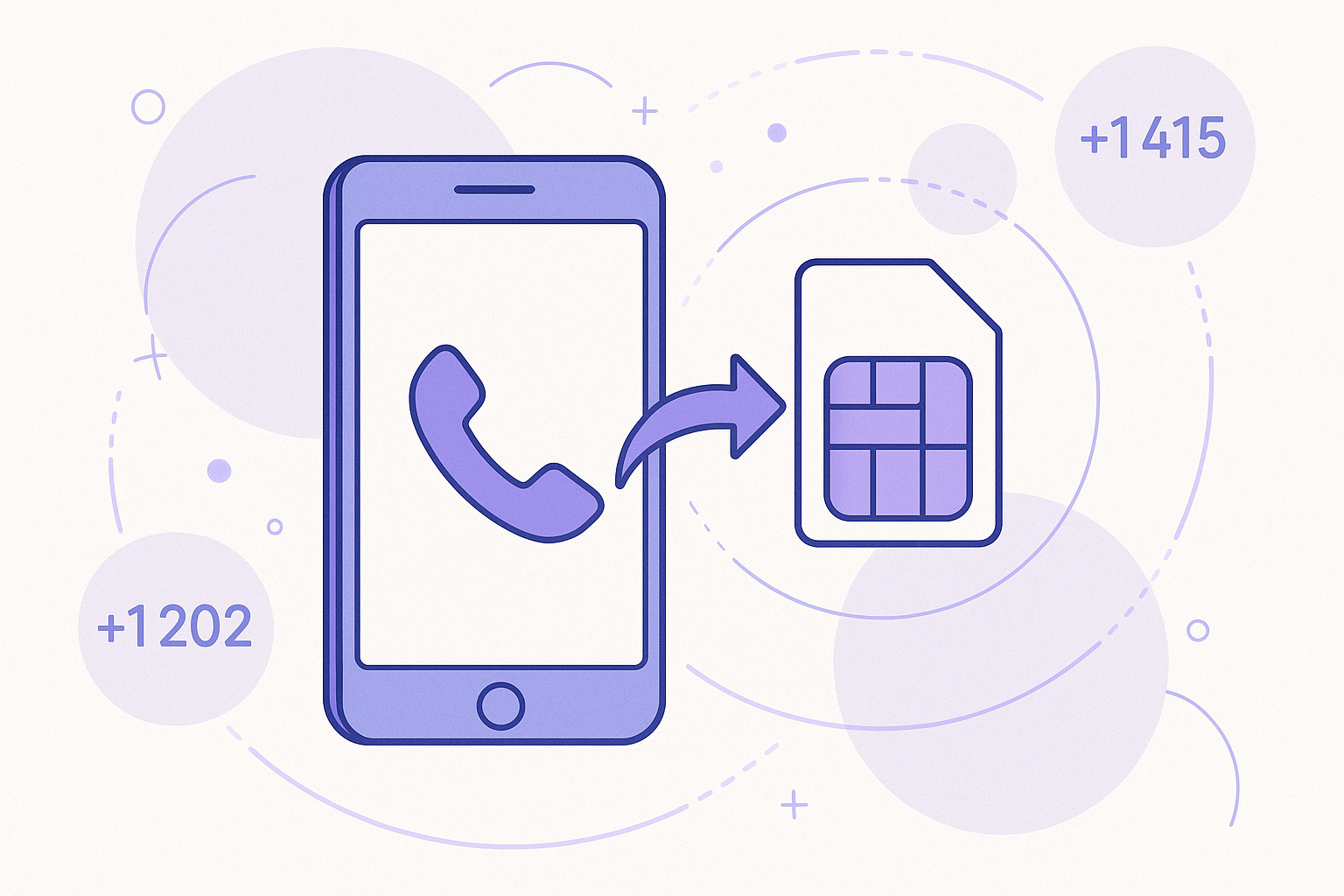
The process is governed by a federal mandate — the FCC's local number portability (LNP) rules — that forces carriers to release your number when you decide to leave. Your number doesn't physically move anywhere. Instead, the routing databases that tell the network "this number lives here" get updated to point to your new carrier.
The entity that manages the behind-the-scenes coordination is called a Number Portability Administration Center (NPAC). When your new carrier submits a port request, the NPAC checks it against what the losing carrier has on file. That's why your data has to match perfectly.
The Account Information You Actually Need
Before you contact your new carrier, pull together this information from your current account:
- Account number — found on your bill or in your carrier's app; not the same as your phone number
- Account PIN or transfer PIN — AT&T, Verizon, and T-Mobile all use a separate 4–6 digit PIN specifically for porting; this is often different from your voicemail PIN
- Billing name — exactly as it appears on the account, including any middle initial or suffix
- Service address — the billing address on file, including ZIP+4 if your carrier uses it
- Account holder's last four digits of SSN or EIN — for business accounts, it's almost always the EIN
One practical tip: log into your current carrier's account portal and screenshot the profile page before you start. Some carriers change your displayed info during a port attempt, and having a record of the original values prevents a lot of back-and-forth.
Wireless vs. Landline vs. VoIP — Different Data, Different Headaches
Wireless ports usually only need the account number, PIN, and billing ZIP. Landline ports (including copper POTS lines) often require a full service address and sometimes the BTN (Billing Telephone Number) if your business has multiple lines under one account. VoIP-to-wireless ports can be the trickiest — some VoIP providers require a written Letter of Authorization (LOA) and take longer to release numbers.
Realistic Timelines by Port Type
Wireless-to-wireless ports between major carriers (Verizon, AT&T, T-Mobile, US Cellular) are typically the fastest. Federal rules require simple ports to complete within one business day once approved, and many go through in a few hours.
Wireless-to-VoIP or VoIP-to-wireless ports typically run 3–7 business days. The systems don't talk as cleanly, and manual review is more common.
Landline ports are slower — plan for 5–10 business days on average, sometimes longer for rural lines served by smaller regional carriers or CLECs. Business multi-line ports with a full number block can stretch to 2–4 weeks.
These are realistic averages, not guarantees. A clean submission with accurate data will always move faster than one that hits a rejection loop.
The Most Common Rejection Reasons (and How to Fix Them)
Most ports don't fail because of some technical impossibility. They fail because of data mismatches. Here's what causes the majority of rejections:
- Wrong account PIN — If you never set a port PIN with your current carrier, call them and create one before you start the process. Don't guess.
- Billing address mismatch — Street abbreviations matter. "St." vs "Street" has killed real port requests.
- Wrong account number — Corporate accounts sometimes have a master account number and sub-account numbers. You need the one directly associated with the line.
- Active contract or installment balance — Carriers can't block a port by law, but they can bill you for the remaining balance on a device payment plan. This doesn't stop the port, but ignoring it creates a collections headache.
- Number on a prepaid account with no PIN established — Prepaid lines often require you to call and set a transfer PIN first. Most prepaid carriers don't set one automatically.
- Number listed under a business name but submitted as a personal name — Common when employees port company lines on their own.
When a port is rejected, the new carrier receives a Firm Order Commitment (FOC) rejection code and a reason. Ask your new carrier for that code — it tells you exactly what didn't match so you can correct it.
A Concrete Example
Say you're moving a Verizon wireless number to a new VoIP business line. You grab your account number from the Verizon app, but you've forgotten that Verizon business accounts use a separate Transfer PIN (different from your My Verizon login). You submit without it. The port rejects within 24 hours. You call Verizon, set a Transfer PIN on the account, resubmit, and the port goes through the next business day. Total delay: about 48 hours, entirely preventable.
What Happens to Your Service During the Port
On wireless ports, your current service stays active right up until the moment the port completes. The switch is nearly instantaneous — you'll lose signal briefly, the new SIM activates, and you're on the new network. Don't cancel your old plan until the port is confirmed complete. Canceling early can orphan the number and make it very difficult to recover.
For landline ports, there's typically a Firm Order Commitment date (the scheduled cutover date) that both carriers agree to. Service transfers at a specific time on that date.
If You're Porting a Vanity or Premium Number
Premium numbers — think 800-555-1234 or a local vanity number like 212-555-BOOK — follow the same porting rules as any other number, but the stakes are higher. These numbers often have real business value attached to them. Before you port, confirm that the receiving carrier or VoIP platform supports the number type (toll-free numbers have a separate database, the SMS/800 registry, which adds a step). If you're acquiring a premium number rather than porting one you already own, marketplaces like GreatNumber let you browse available numbers before you commit to a carrier or platform.
Once you own a number worth keeping, document your account credentials somewhere secure. The biggest threat to a valuable number isn't a carrier switching — it's losing access to account info and having a port request reject indefinitely.
Quick Takeaways
- Gather your account number, transfer PIN, billing name, and billing address before you start — exact matches only
- Wireless-to-wireless ports often complete in one business day; landline ports take up to two weeks
- Most rejections are data mismatches, not technical failures — get the rejection code and fix the specific field
- Don't cancel your old service until the port is confirmed complete
- Prepaid and VoIP accounts often require you to set a transfer PIN manually before submitting a request
- Business lines and toll-free numbers add extra steps — plan accordingly
If you're in the market for a specific number worth porting and holding long-term, browse available numbers at GreatNumber to see what patterns and area codes are currently available.