Your phone number is on business cards, in client contacts, on your website. The idea of losing it because you decided to switch from Verizon to T-Mobile — or AT&T to Mint Mobile — is a genuine nightmare. So let's answer the question directly: yes, you can keep your phone number if you switch carriers, and you have federal law on your side.
How Number Portability Works (And Why It's Your Legal Right)
The FCC mandated local number portability (LNP) for wireless carriers back in 2003. Before that, switching carriers meant getting a new number, full stop. Today, every US carrier — from the big three (Verizon, AT&T, T-Mobile) down to prepaid MVNOs like Cricket, Boost, and Consumer Cellular — is legally required to release your number when you request a port-out.
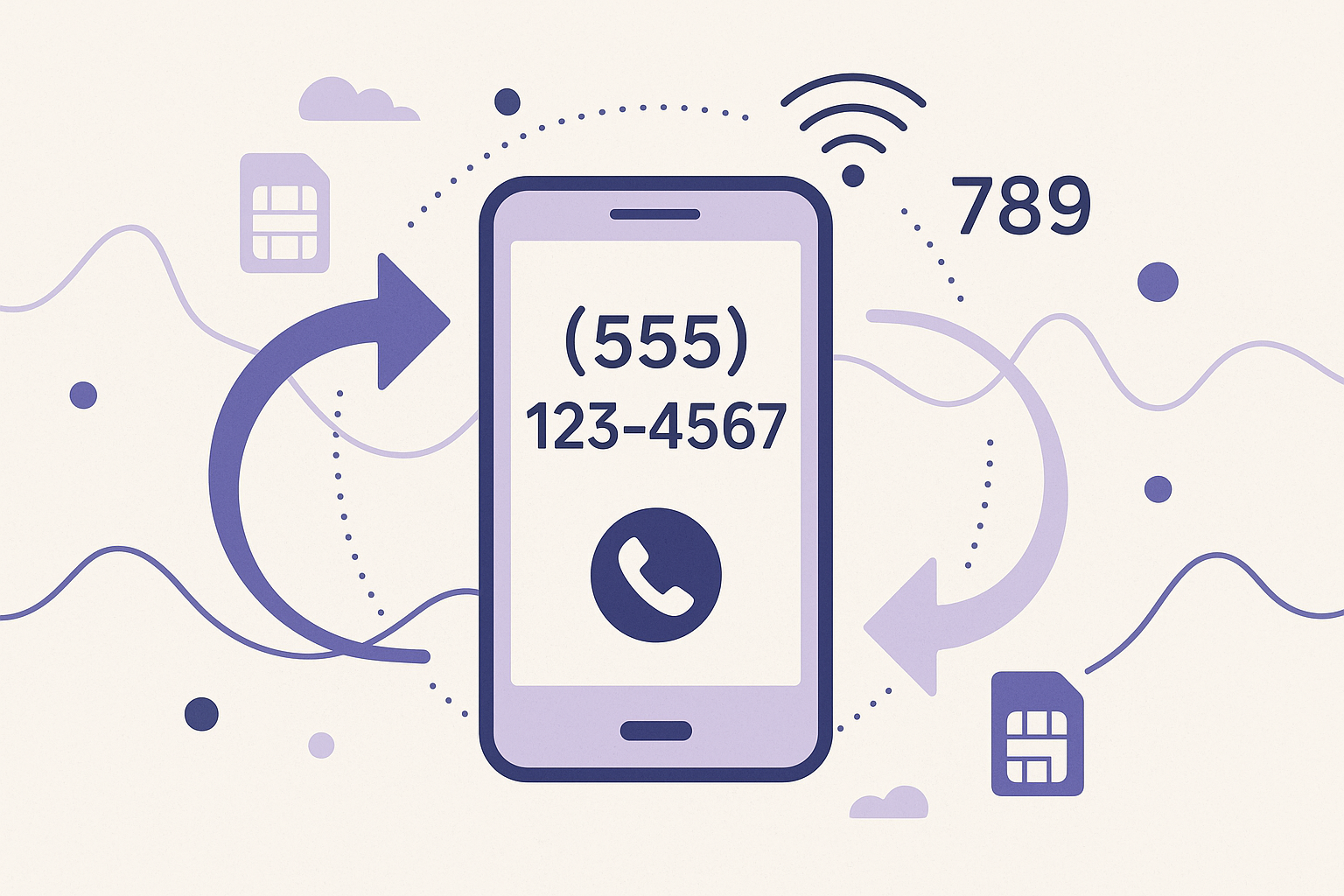
The process is called porting, and here's the short version of how it works:
- You sign up with your new carrier — but don't cancel your old service yet.
- You give the new carrier your account number and PIN/password from the old carrier.
- The new carrier submits a port request to your old carrier.
- Your old carrier must release the number, typically within one business day for wireless-to-wireless transfers.
- You get a confirmation, your old service cancels automatically, and your number rings on the new SIM.
That's it. Most wireless ports complete in a few hours. Landline or VoIP ports can take several days.
What Information You Need Before You Port
This is where people run into trouble. Carriers require exact account details, and even a small mismatch can reject the port request.
You'll need:
- Your account number (find it on a bill or in your carrier's app)
- Your account PIN or transfer PIN — not your voicemail PIN, not your online password
- The billing name and address on the account, exactly as it appears
- Your 10-digit phone number, including area code
T-Mobile, for example, now uses a "Number Transfer PIN" generated inside the T-Mobile app. AT&T and Verizon have similar systems. Check your current carrier's support page to generate this before you start.
One rule that trips everyone up
Do not cancel your old service before initiating the port. The moment you cancel, your number gets released back into the pool and could be reassigned to someone else within days. Let the port process do the cancellation for you.
Common Reasons a Port Gets Delayed or Rejected
Even a straightforward port can hit a snag. The most frequent causes:
- Mismatched account info — a middle initial, an old address, anything off
- Outstanding balance or contract — some carriers flag accounts with unpaid bills (though they can't legally block a port for this reason, they may slow-walk it)
- Active installment plan on the device — your phone may be carrier-locked if you're still paying it off; your number can still port, but the handset won't work on the new network until it's unlocked or paid off
- MVNO quirks — if you're on a smaller carrier like Straight Talk or TracFone, find your underlying network (AT&T, Verizon, etc.) and call them directly for the account number
If a port is rejected, your new carrier will tell you why and give you a chance to correct the info.
Can I Keep My Phone Number If I Switch Carriers and Move to a Different State?
Yes, with one caveat. Your number has a home area code — say, 312 for Chicago or 305 for Miami — and that area code stays with you regardless of where you physically move. A 305 number can ring in Seattle. Wireless numbers aren't geographically tied the way old landlines were.
The only exception: if you're porting a landline number from one state to a wireless carrier in a completely different rate center, some carriers won't accept it. That scenario is rare but worth asking about upfront.
What About Vanity or Premium Numbers — Can Those Be Ported Too?
Yes. A number like 1-800-555-1234 or a local pattern like (212) 222-2222 ports the same way any other number does. The value is in the digits, not the carrier holding them.
If you're thinking about getting a number worth keeping in the first place — one that's memorable enough to put on a billboard, a truck wrap, or a TV spot — GreatNumber lists thousands of premium local and toll-free numbers across every area code. Once you own a great number, you can port it to any carrier you like.
A Concrete Example: Switching From AT&T to T-Mobile
Say you've been an AT&T customer for years with a 646 New York number. You want to move to T-Mobile's Magenta plan.
- Log into your AT&T account, locate your account number (it's on the paper bill or under "Account overview").
- Generate or find your AT&T port-out PIN (AT&T calls it a "Number Transfer PIN," generated under account settings).
- Go through T-Mobile's signup flow and enter both pieces of information when prompted.
- T-Mobile submits the port. AT&T typically releases wireless numbers within a few hours.
- Your 646 number is now live on T-Mobile. Your AT&T account closes automatically.
Total effort: about 15 minutes of your time. The actual transfer happens in the background.
Quick Takeaways
- You have a federal right to keep your number — carriers cannot legally block a valid port request.
- Start the port from your new carrier; never cancel the old account first.
- Have your account number, transfer PIN, and billing details ready — exact matches matter.
- Most wireless ports complete within a few hours; landline ports can take up to a week.
- Your area code travels with you, even if you move across the country.
- A carrier-locked phone and a locked number are two different things — your number can always move.
- Premium and vanity numbers port just like any other number.
If you're switching carriers and want to use the moment to upgrade to a more memorable number at the same time, browse available numbers at GreatNumber — it's worth seeing what's out there before you commit to a new plan.